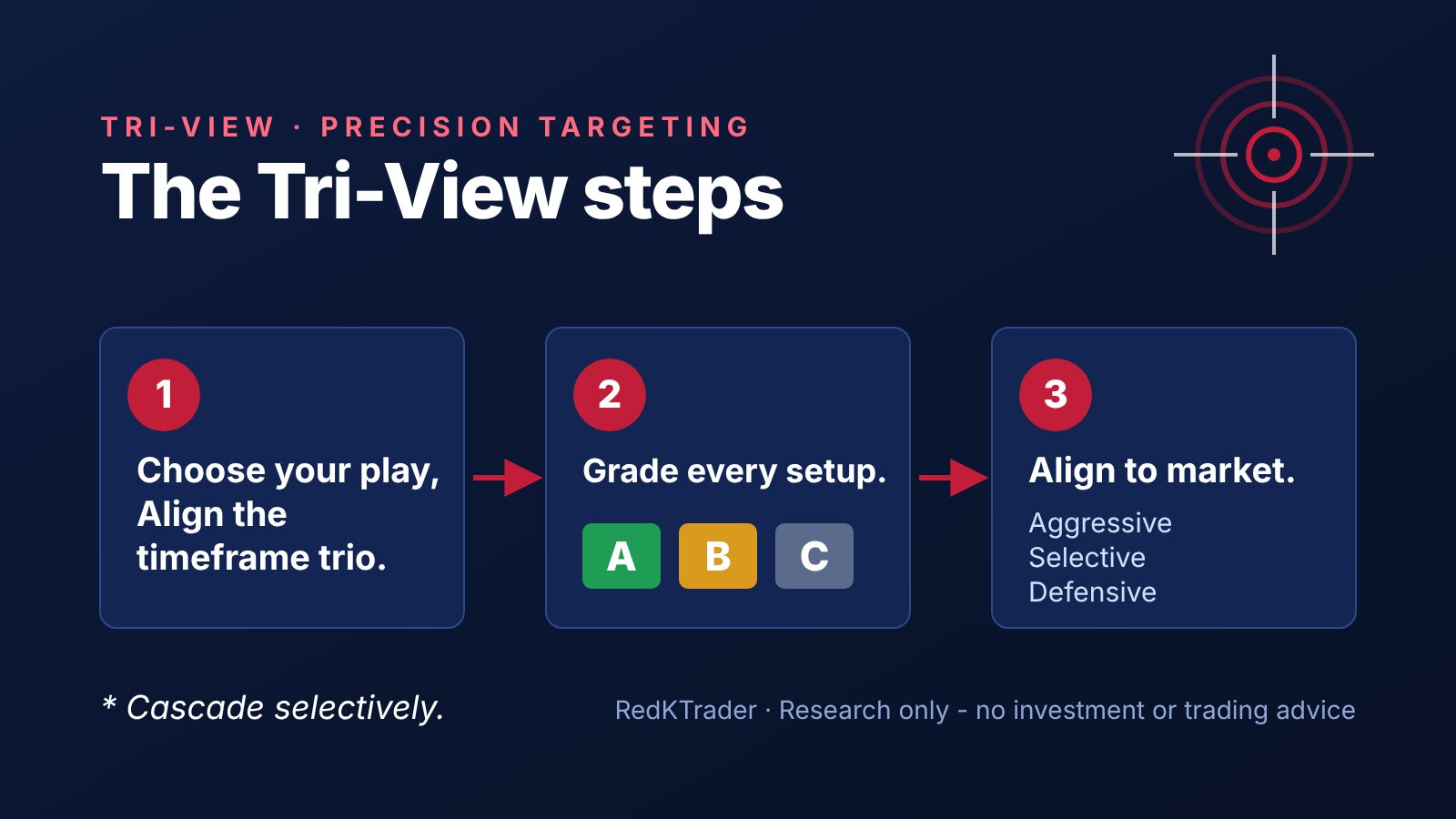
Multi-timeframe analysis often turns into switching between different charts until one of them agrees with what you already wanted to see. The fix is to decide, before you look, which set of timeframes is actually relevant to the trade you are planning and what each timeframe is for. This is a core concept in the Tri-View method.
Three relevant timeframes - each with one specific job
- Context TF answers: is the bigger picture supportive of this trade type at all?
- Analysis TF answers: is there a possible setup here, and how good is it?
- Execution TF answers: when exactly do I act?
Let the trade type decide the timeframes
The right "timeframe trio" depends on the purpose of the trade, and how long you intend to hold that position. A short intraday trade might use a 1-hour / 15-minute / 3-minute trio.
A position (trend) trade might use weekly / daily / 1-hour. Decide your intention first, then the timeframe trio follows. No guessing and no distraction.
A simple checklist
- Name the type of trade you are planning and the intended position holding period.
- Check the Context TF chart first. If the higher TF does not support the trade, stop there.
- Move to the Analysis TF: grade the setup before you look for an entry.
- Only then drop to the Execution chart to time the entry.
This is the core of the Tri-View method, taught in Track 2 of the TACT coaching series.
Tri-View combines Context TF and Analysis TF in a single chart for you.
Research only - no investment or trading advice. This article describes how price and volume can be read; it is not a trade recommendation.